AI Output Verification: Human Judgment in the Age of AI

Maverick Foo
Tuesday, 17th November 2026
In a recent AI for Finance workshop, I asked participants how they would check the results of an AI-generated analysis. The spreadsheet gave us a practical test of AI output verification: could they establish that the answer was correct?

Some went back to the source material and manually checked selected figures. Others asked two models to analyze the same material and looked for differences. A less common approach was to switch AI’s role deliberately from analyzer to reviewer and back!

Yes, you can say some are more creative with AI than others. But what interests me is the judgment behind those choices. A professional answer can still be wrong, and the person presenting it needs a way to tell what’s style, and what’s substance.

The Human Premium in the age of AI is being able to understand, verify, and stand behind the work you produce with AI.

Faster Analysis Still Needs Someone Who Understands It

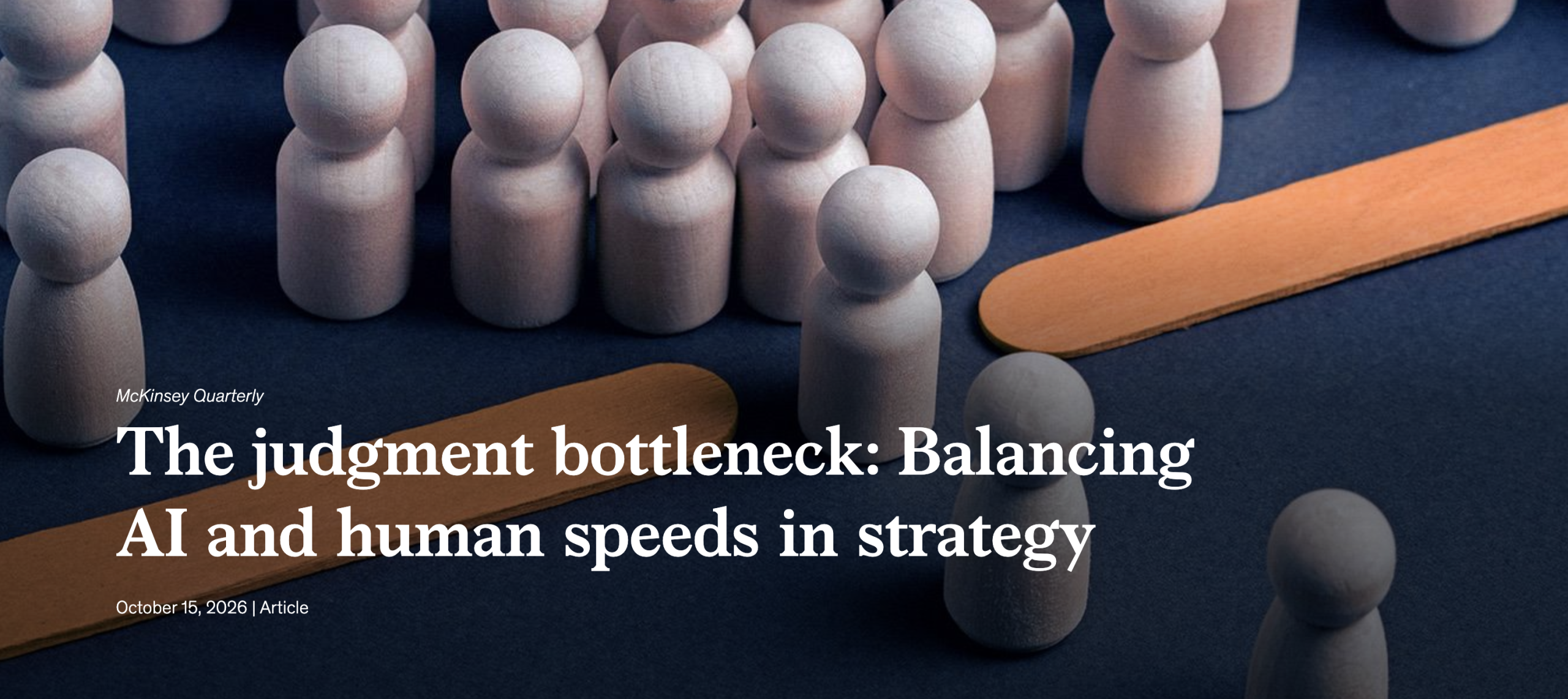
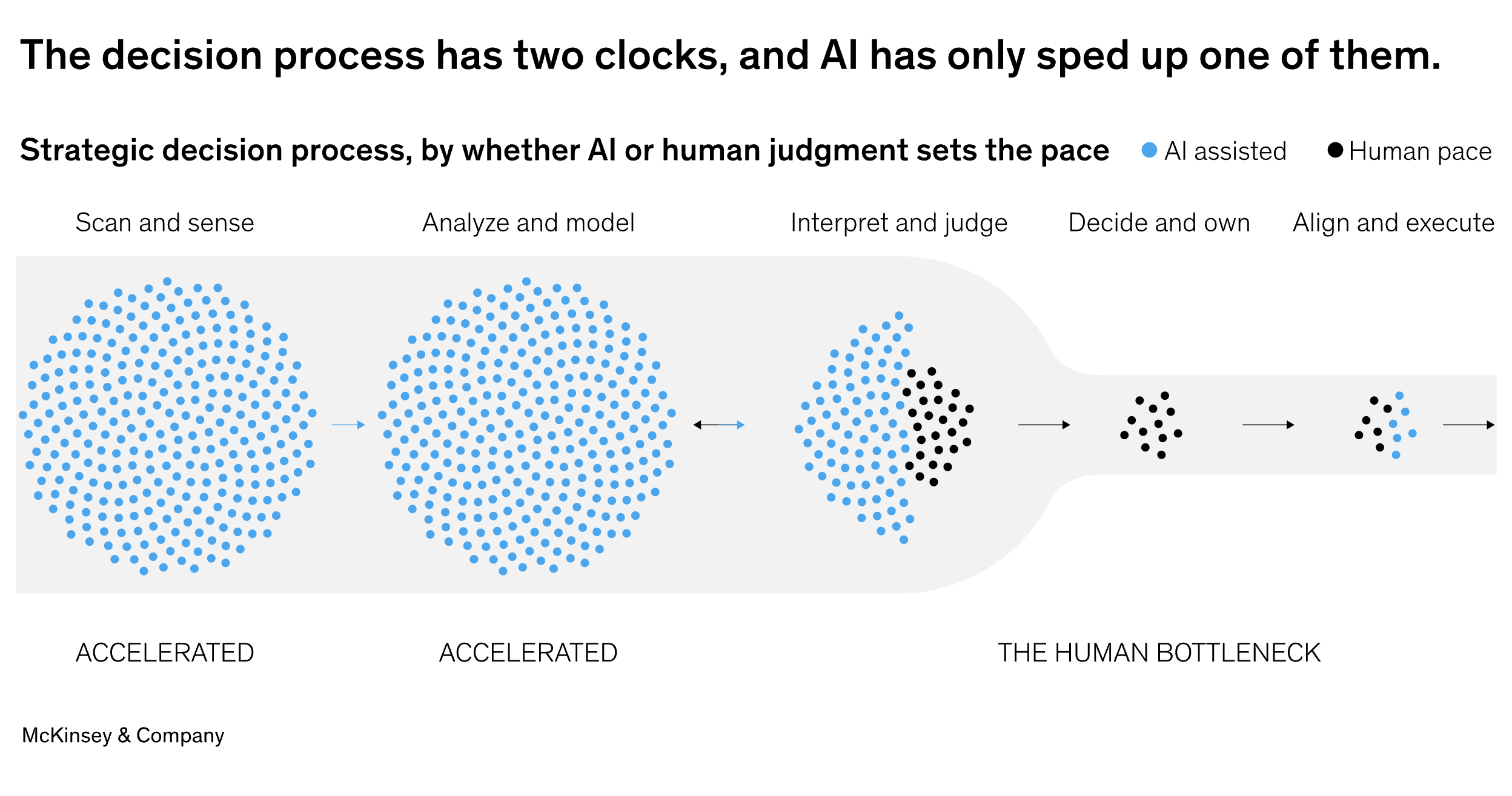
McKinsey’s October article, The Judgment Bottleneck, examines what happens when analysis accelerates faster than people can evaluate it. Its focus is strategic decision-making, where leaders still need to question assumptions, weigh consequences, and bring people into agreement.

One company described in the article produced analysis ten to twenty times faster and generated more scenarios. Executives then needed more review time because the assumptions and sources behind the work were unclear.

McKinsey also identifies a development problem: handing analysis to AI can remove opportunities for less experienced employees to build judgment through doing the work.

That brings me back to the spreadsheet activity we ran in the workshop. While some trainers amaze participants with what AI can do, at Radiant Institute, we try to balance it with what we should do with AI. If participants only practice getting the analysis produced, we have left an important part of the job out of the exercise.

McKinsey Quarterly article cover: The judgment bottleneck: Balancing AI and human speeds in strategy, October 15, 2026. Open the original article.

AI Output Verification Starts With a Question

When I ask participants how they would verify the answer, the task changes. They have to consider which figures matter, what the source can establish, and where the analysis could have gone wrong.

Each checking approach has a purpose. A source check tests selected results against the underlying material. Comparing models can reveal discrepancies to investigate. Switching AI’s role into a reviewer gives it a different assignment: look for weaknesses in the analysis.

The person still has to evaluate what those checks reveal. Two models can agree on the same error, and an AI reviewer can miss something important. Checking selected figures also leaves the rest of the analysis untested.

For consequential work, the checks need to match the stakes. A plausible explanation needs evidence, and a sound calculation can still answer the wrong business question.

The Human Premium Includes Knowing What to Challenge

I have also seen experienced participants “cheat” by using their own domain knowledge to frame a problem more clearly and remove unnecessary steps, before letting AI produce anything. They understand why the work is being done, so they can recognize when the proposed route makes little sense.

I have also seen curiosity lead participants to “think out of the box” to change the approach entirely, including changing the role AI plays. Both are useful contributions, and they can exist in the same person.

To me, AI can amplify the strengths people bring to the task. Experience helps someone recognize a questionable assumption. Curiosity helps someone explore a different way to test it.

That is the human premium I want to preserve: the ability to decide what deserves scrutiny and take responsibility for the conclusion. A polished explanation becomes useful when its owner can show why it holds up.

McKinsey exhibit showing AI accelerating scanning and analysis while interpretation, judgment, ownership and execution continue at a human pace. Open the original article.

Give AI a Reviewer Role, Then Review Its Review

McKinsey explicitly discusses using separate AI agents to examine analysis from different perspectives, while keeping an experienced person accountable for consequential decisions. My workshop observation connects to that principle through a simpler change of role.

An analyzer is working toward an answer. A reviewer can be asked to challenge it against the source material and the task requirements. That change creates another opportunity to notice unsupported claims or questionable assumptions.

For example, a team could ask its approved AI tool to identify which conclusions lack evidence, which calculations need checking, and which assumptions would change the recommendation. Those are questions to investigate, rather than a certificate that the analysis is correct.

The author then checks the issues raised and records what remains uncertain. In finance, that might mean tracing a figure to the correct period and checking whether a variance explanation is supported. A plausible narrative cannot establish why the number changed.

Keep Judgment Inside the Practice

In 1896, John Dewey’s experimental school in Chicago began with 16 students in three rooms. The following year, he wrote in My Pedagogic Creed:

“I believe that education, therefore, is a process of living and not a preparation for future living.”

Dewey was writing about schooling. The connection I draw to workplace AI is practical: people can develop judgment while completing a task, by questioning the material, checking a result, and explaining their decisions.

The spreadsheet exercise gives that practice a place inside the work. The answer and the reasoning used to accept it belong in the same conversation.

The Human Premium Worth Keeping

AI can make analysis easier to produce and give us more ways to question it. The person using it still needs enough understanding to recognize a weak answer and take responsibility for a strong one.

That is what I want participants to leave the workshop practicing: producing work that looks good, holds up to scrutiny, and retains their judgment.

Implications for Leaders and L&D

  • Include verification in the assignment. Ask for supporting evidence, important assumptions, and unresolved questions alongside the output.
  • Practice the challenge. Give people opportunities to review AI-assisted work and explain why they accepted, corrected, or rejected a conclusion.
  • Retain appropriate oversight. Building judgment in the team can support better handoffs. High-stakes decisions still require accountable people with suitable expertise and authority.

Try This This Week

  • Choose one small AI-assisted analysis using approved tools and permitted data. Before reviewing it, have its author identify the key conclusion and the evidence needed to support it.
  • Ask AI to review the analysis against that evidence. Have the author investigate the issues raised, check important calculations or claims, and explain any remaining uncertainty to a colleague.
  • Discuss what changed between the first output and the version they would stand behind. Use the Quality driver in Radiant Institute’s 7 Drivers of AI Effectiveness to keep the conversation focused on accurate, relevant, usable work.

If your organization wants to develop that capability, Radiant Institute can help you build AI enablement around the work your people need to deliver.

Maverick Foo

Maverick Foo

Lead Consultant, AI-Enabler, Sales & Marketing Strategist

Partnering with L&D & Training Professionals to Infuse AI into their People Development Initiatives 🏅Award-Winning Marketing Strategy Consultant & Trainer 🎙️2X TEDx Keynote Speaker ☕️ Cafe Hopper 🐕 Stray Lover 🐈

0 Comments

Share this
Send this to a friend