AI Time Savings: What Will Your Team Do With the Hours AI Frees Up?

Maverick Foo
Tuesday, 10th November 2026
How do you know whether your AI investment is paying off? For many organizations, the answer starts with a simple measure: how much time did it save?

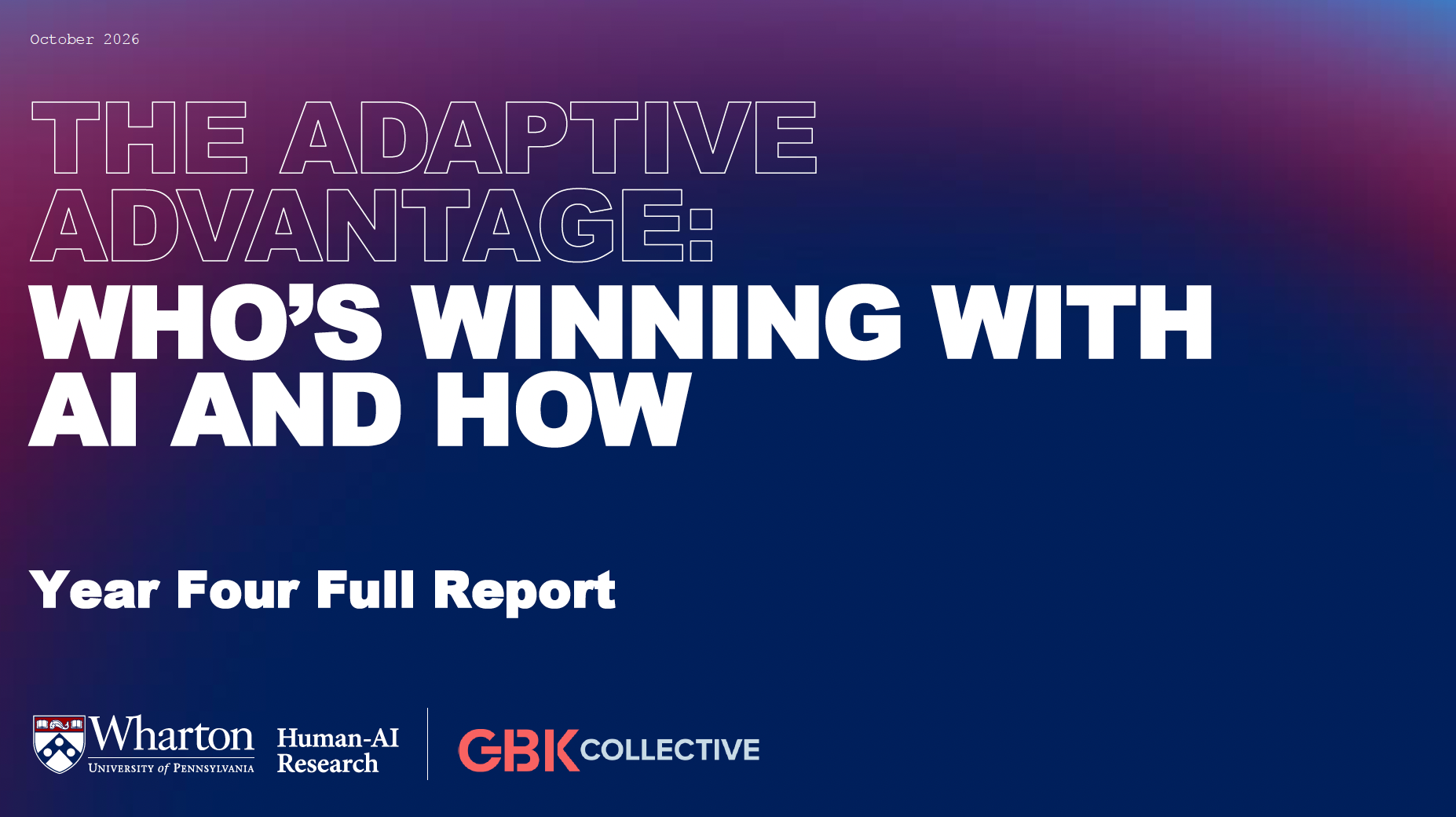
In The Adaptive Advantage, a 2026 report from Wharton Human-AI Research and GBK Collective, hours saved was the most commonly selected measure of AI return among managers whose departments measure it.

That makes sense. Time is something most teams can understand, and a faster task is a result people can see.

But whenever I discuss this in our training, I like to follow it with another question: what do we want to do with the extra time?

AI time savings become more meaningful when a team decides what the available time is for and checks what happens next.

What Wharton Found About AI Time Savings

The Wharton and GBK study surveyed employees at large US private-sector organizations. Among the 941 managers and above whose departments at least occasionally measured AI ROI, 40% selected hours saved as one of their main measures.

Respondents could select up to three measures, so that does not mean 40% measured only time saved.

The researchers also compared respondents who tracked at least one growth measure, such as output volume or customer satisfaction, with those who tracked efficiency measures alone:

  • 35% of managers tracking at least one growth measure reported strongly positive financial returns from AI.
  • 13% of those tracking efficiency measures alone reported strongly positive financial returns.

This is an association in a self-reported survey. It does not prove that adding a growth measure causes better returns, or that the first group earned 2.7 times as much money.

What it does offer is a useful prompt for leaders: once we know a task is faster, what else should we look at?

Cover of The Adaptive Advantage: Who’s Winning with AI and How, October 2026, by Wharton Human-AI Research and GBK Collective. Open the full report.

Where Does the Time Go?

Imagine your sales team uses AI to prepare a client proposal. The first draft takes less time, but someone still has to check the figures, confirm the details, and review the final version.

If the reviewer spends an extra hour correcting the draft, the saving at the first step may not leave the team with an extra hour at all. The useful comparison is the work from start to finish, including the checking and handoffs.

And even when time is genuinely available, it can be absorbed by the next urgent request or another meeting. That is where an old observation comes in.

In 1955, historian C. Northcote Parkinson wrote an essay in The Economist while teaching in Singapore. He opened with an imagined example: a person taking an entire day to write and send a postcard.

His observation became known as Parkinson’s law:

“work expands so as to fill the time available for its completion.”

Parkinson was making a satirical point about work and bureaucracy, not studying AI. Still, his observation gives us a useful question to ask when a faster task creates space in a working week: who decides what happens in that space?

From Acceleration to Actualization

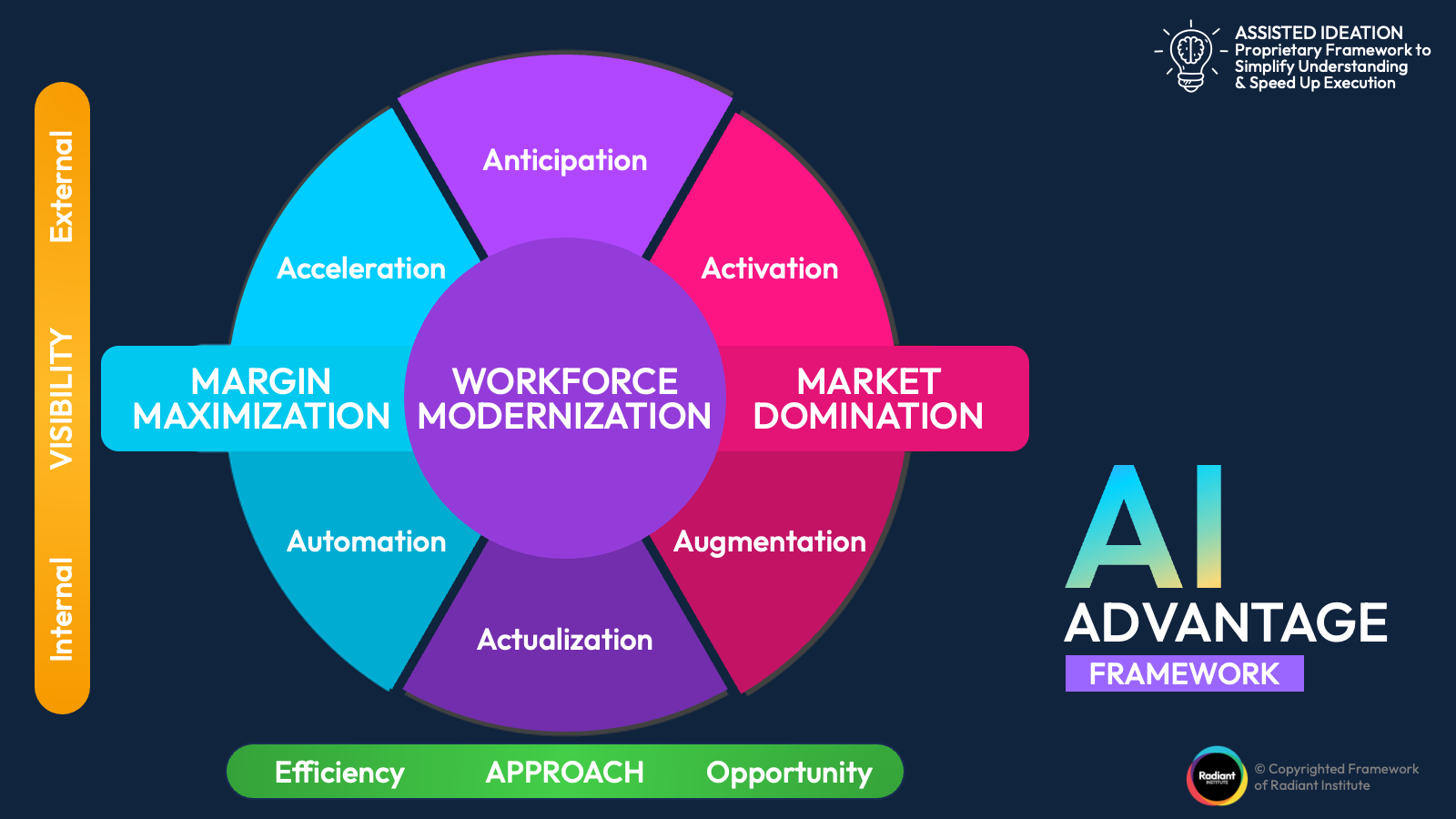
At Radiant Institute, we use the AI Advantage Framework to talk about different ways AI contributes to work.

One of those advantages is Acceleration: AI compresses the time needed to complete a task while people continue to direct and check the work. A faster proposal draft is one example.

Another is Actualization, which is about how people’s roles, capabilities, and ways of working evolve as AI becomes part of the organization.

The question about extra time connects the two. If a manager and their team agree to use some of that space for coaching, learning, or improving a recurring process, they have a chance to change more than the speed of one task.

One protected hour does not transform a culture by itself. But a repeated decision to make room for different work can be a starting point.

That distinction matters to anyone in charge of talent development. Faster work creates an opportunity to develop people, but someone still needs to make that development possible.

Radiant Institute AI Advantage Framework showing Automation, Acceleration, Anticipation, Actualization, Activation and Augmentation.

Give the Hours a Purpose

When I ask participants what they would do with time AI saves, the answer does not have to be another item on an already crowded to-do list. The better answer depends on what their team needs.

For example, the time could be used to:

  1. Learn a new skill. A team member practices checking AI-generated analysis, then explains their reasoning to a colleague.
  2. Coach and mentor. A manager uses part of the week to review a junior colleague’s work and talk through the decisions behind it.
  3. Improve an SOP. The team updates a frequently used procedure so the next person can complete the work with fewer unclear handoffs.
  4. Run an experiment. A small group tests a different way to serve customers and reviews what it learns.

There may also be weeks when breathing room is the right choice. The point is to make the decision with your people rather than assume that every available minute must become more output.

As we discussed in our article on leaders using AI, people pay attention to what their leaders make time for. If learning and improvement matter, they need a place in the working week.

Try One Workflow for 30 Days

Let’s return to the proposal example. Suppose a team prepares one proposal a week and wants to test whether AI creates usable time for coaching.

Start by recording the time the team normally spends on a proposal, including preparation, checking, and revisions. Then compare it with the same kind of work using AI over the next few weeks.

If the team finds that the end-to-end work takes roughly one hour less, agree on what to do with part of that hour. For example, the manager and a junior colleague might protect 30 minutes for coaching after each proposal.

At the end of 30 days, review three things:

  1. Was the time available? Check the complete workflow, not just the first draft.
  2. Did the planned activity happen? Look at whether the coaching time was actually protected.
  3. What changed? Compare a useful outcome, such as how consistently proposals meet the team’s agreed quality criteria or how much rework they need.

This is a small test, not a financial ROI calculation. Work volume, proposal complexity, and other changes can affect the result, so keep those in view before attributing an improvement to AI or coaching.

Implications for Leaders and L&D

  • Look beyond the first task. Include review and handoffs before reporting AI time savings as team capacity.
  • Ask the people doing the work. A manager may see a saving differently from the person who experiences the workload every day.
  • Give development a place in the schedule. Coaching and learning need time and an owner, just like any other priority.

Try This This Week

  • Pick one recurring task where your team already uses AI. Record what happens before and after the AI-assisted step.
  • Ask your team what they would like to make space for if time is genuinely available. Agree on one small choice and when it will happen.
  • Explore Actualization in the AI Advantage Framework, then choose one way to review the result after 30 days.

Closing Thoughts

Hours saved are a useful starting point. They help us see where AI may be making work easier and where a team could have more room to act.

The next decision belongs to the people doing and leading that work. With a clear purpose for the time, they can test whether it helps them learn, support colleagues, improve a process, or explore an idea that kept getting postponed.

If your team is working out how to connect AI use with better day-to-day work, Radiant Institute can help you build that conversation around a real workflow.

Maverick Foo

Maverick Foo

Lead Consultant, AI-Enabler, Sales & Marketing Strategist

Partnering with L&D & Training Professionals to Infuse AI into their People Development Initiatives 🏅Award-Winning Marketing Strategy Consultant & Trainer 🎙️2X TEDx Keynote Speaker ☕️ Cafe Hopper 🐕 Stray Lover 🐈

0 Comments

Share this
Send this to a friend