Agentic AI in the Workplace: From Chatting With AI to Conducting It

Maverick Foo
Tuesday, 28th July 2026
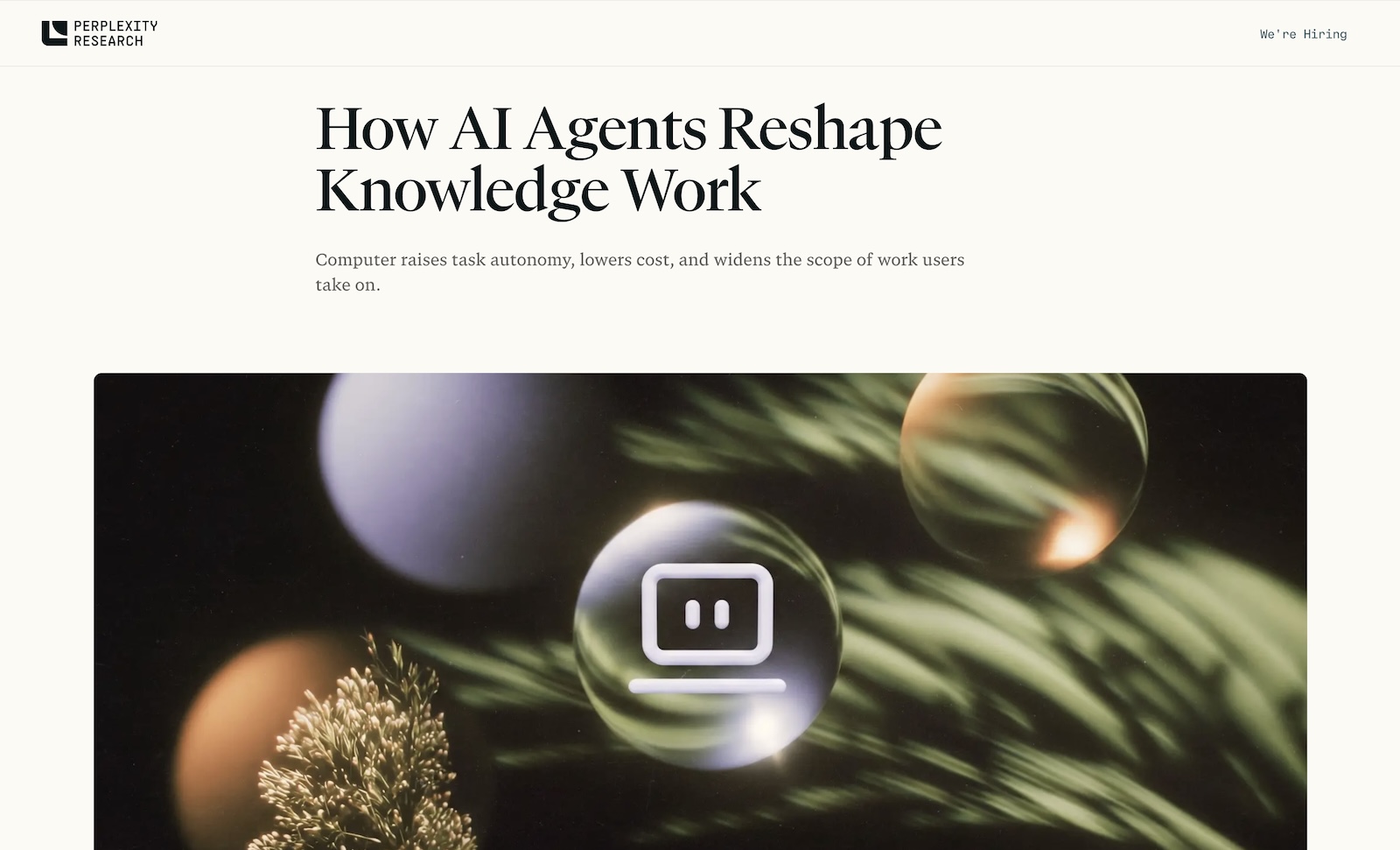
26 minutes versus 33 seconds.

That is the gap Harvard and Perplexity found when they studied two ways of working with the same AI. In one mode the tool worked on its own for about 33 seconds before it needed the user again.

In the other, it ran for 26 minutes before pausing. That is roughly 48 times more autonomous work in a single session, and it points to a quiet change in how knowledge work gets done.


From Answering to Acting

There are two modes at play. Conversational AI is the chat model most of us know: you ask, it answers, and you carry the output to the next step yourself. Agentic AI goes further: you hand over a whole outcome, and the tool plans, searches, builds, and returns a finished result with limited input from you.

The researchers describe this as the move from an assistant to an execution engine. The practical marker is simple. Conversational tools support the back and forth. Agents take the work off your desk and bring it back done.

What the Research Actually Found

On matched tasks, the agentic mode was far more efficient. Completion time fell from 269 minutes to 36 minutes, an 87% drop, and estimated cost fell by 94%, roughly 16 times cheaper for the same work.

Quality held up too. User dissatisfaction was 55% lower in the agentic mode, falling from 2.9% to 1.3% of queries. The quicker route still produced cleaner results.

The cost picture has a catch worth knowing. To beat the agent on cost, a person would need to finish every manual step in under 20 minutes, with a median breakeven of about 18 minutes across domains. Most real knowledge work does not fit inside that window.


Speed is the Small Story. Scope is the Big One.

The efficiency numbers grab attention, but the study argues the deeper change is scope: the range and complexity of work people even attempt. With agents, users worked outside their primary field 59% of the time, compared with 50% on search.

Half of their agent tasks sat at the Create level of cognitive work, versus 26% on search. And a single agent task drew on 2.40 distinct knowledge domains on average, against 1.74 for search.

In plain terms, one person with an agent starts producing work that used to need a small team. That is a capability story before it is a speed story.


The Two Things That Decide Who Gains

Picture three rungs on a ladder.

  1. When you are the loop, you do every step yourself.
  2. When you are in the loop, you ask AI and approve each step, but you are still the engine.
  3. When you are on the loop, you let AI act while you set the guardrails, supervise, and step in when it pauses for you.

Two things decide how high a team climbs. The first is access. Agentic ability usually sits behind the paid tier of tools. Think Copilot Chat versus M365 Copilot, Gemini Business Starter versus Business Standard, ChatGPT Free versus ChatGPT Work, or Claude Free versus Pro. So a team on the free plan often cannot Act even when they want to.

The second is skill. Training people for agentic work while giving them only chat tools creates capability without execution, a gap the study is blunt about.


The Human Still Decides the Result

More autonomy does not remove the human. A separate study by Demirer and colleagues tracked more than 100,000 developers and found the newest AI agents lifted coding activity by 180%, yet that gain shrank to 30% by the time work reached release. The bottleneck sat downstream, in the human review chain. When execution is delegated, the job shifts from operator to supervisor: less doing, more directing, verifying, and extending.


A Conductor’s Lesson

Benjamin Zander had been conducting for 20 years when a quiet truth hit him. The conductor of an orchestra never makes a single sound. He stands before a hundred musicians, and not one note comes from him. His whole power rests on his ability to make other people powerful.

That is the shift agentic work asks of us. When you let an agent run, you are not stepping back. You are stepping up to the podium. Your job stops being the one who plays every note and becomes the one who sets the tempo, shapes the sound, and knows when to cue and when to let go. The music was never in the baton. It was always in the players.

Implications for Leaders and L&D

  • Access and skill move together. Budget for agent-capable tools and the training to supervise them, or the gains stay locked behind the free tier.
  • The valuable human contribution is shifting from doing every step to scoping the work, verifying output, and extending it. Build that into role expectations and development plans.
  • Faster output is not the same as realised value. Plan where freed capacity goes, or saved time quietly turns into more meetings.

Try This This Week

  • Take one recurring task and map it across the three rungs, is the loop, in the loop, and on the loop, then decide which rung it should live on.
  • Pick one task you currently route to a specialist, test whether an agent plus your review can handle it, and check the output honestly.
  • Map where your team really sits on the AI Partnership Phases, our AI adoption framework for workplace teams, so you can see who is still asking AI for help and who is ready to let it act while they supervise.

Ending Thought:

The headline numbers are striking, but the real message is quieter. Agents remove execution as the thing that holds work back, which frees people to direct, judge, and expand what they attempt.

The organisations that gain are the ones that pair the right access with the skill to supervise well.

If you want help making that shift with your team, Radiant Institute designs AI enablement programs that turn findings like these into everyday practice. Let this sink in over the week, and start with one workflow you are ready to conduct instead of play.

Maverick Foo

Maverick Foo

Lead Consultant, AI-Enabler, Sales & Marketing Strategist

Partnering with L&D & Training Professionals to Infuse AI into their People Development Initiatives 🏅Award-Winning Marketing Strategy Consultant & Trainer 🎙️2X TEDx Keynote Speaker ☕️ Cafe Hopper 🐕 Stray Lover 🐈

0 Comments

Submit a Comment

Your email address will not be published. Required fields are marked *

Share this
Send this to a friend