How to Choose a Corporate Training Provider That Actually Changes How Your Team Works

1. They assess before they teach
Providers who start with a generic curriculum are guessing. The ones worth hiring start with a pre-training assessment including mapping roles, tasks, and where the actual gaps are. Hence, the content that shows up in the room is built for your people, not a hypothetical audience.
2. Practice happens on real work, not made-up examples
There’s a big difference between “practice writing a prompt” and “practice writing the report you’ll submit this Friday.” If the exercises in the room use your team’s real tasks, templates, and data (within reason), the skill transfers immediately. If they use generic case studies, it usually doesn’t.
3. They’re not locked to one tool
A provider who only knows one platform will teach you that platform, whether or not it’s the right fit for your workflow. Look for training that’s tool-flexible and able to work across whatever your organization has already standardized on, rather than pushing you toward whatever the trainer happens to know.
4. Reinforcement is part of the plan, not an afterthought
A single workshop rarely changes a habit. The providers who get results build in follow-through, playbooks, check-ins, or light reinforcement in the weeks after the session — so the adoption doesn’t quietly fade once the calendar invite is over.
5. They can show you a before-and-after, not just a satisfaction score
“Participants rated the session 4.8/5” tells you people enjoyed the room. It doesn’t tell you anything has changed. Ask whether the provider measures skill or confidence before and after training, and whether they can show you that movement in a report you could hand to your own leadership.
6. Safety and responsible use are built into the workflow, not bolted on
This matters especially for AI-related training. A provider should be teaching your team how to use these tools without creating data, compliance, or accuracy risks as a habit baked into the workflow, not a separate slide titled “risks to consider.”
Assess starts before anyone enters the room. A pre-work assessment identifies which roles and tasks have the biggest workflow gaps, so the training focus is set by evidence, not assumption.
Activate is the hands-on stage: teams practice using their own real tasks, and leave with reusable templates and prompt patterns rather than one-off tricks that only work in the training environment.
Anchor is what happens after the workshop ends: Reinforcement that standardizes how the team keeps using what they learned, so results don’t depend on one or two enthusiastic early adopters.

William Leong
Lead Consultant, AI-Enabler, Sales & Marketing Strategist

What China’s DeepSeek Really Mean for The Rest of Us
Is it rewarding to have employees taking such initiatives to become more productive… or is the risk of security something to worry about?

AI Adoption X AI Enablement
Is it rewarding to have employees taking such initiatives to become more productive… or is the risk of security something to worry about?
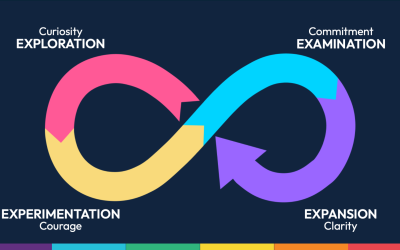
The 4 Stages of Organizational AI Enablement
Is it rewarding to have employees taking such initiatives to become more productive… or is the risk of security something to worry about?
REACH OUT TO US
Fill up your details below, and we will get back to you A.S.A.P.!
0 Comments